
Table of Contents


Patents, Patients and the Price of a Pill: India’s Balancing Act Between Innovation and Access
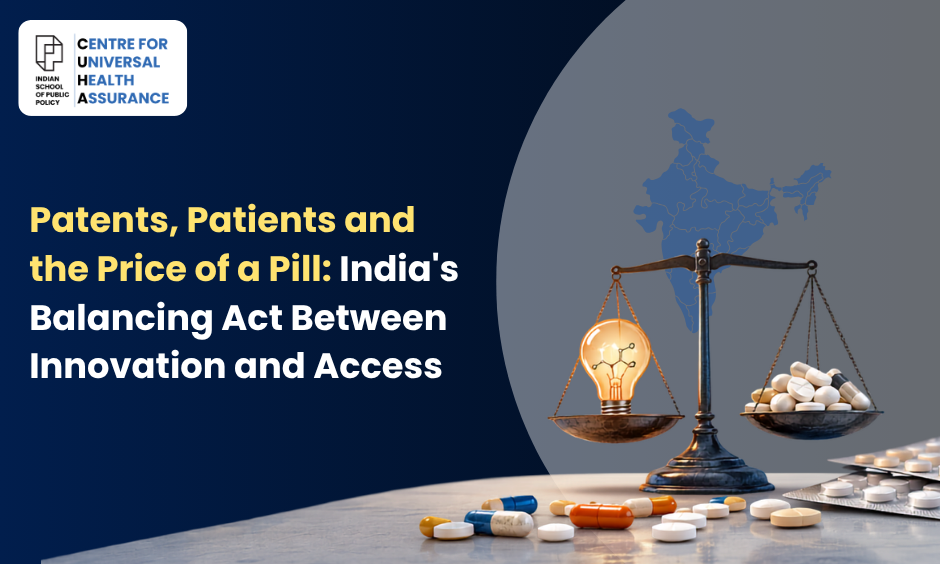

Every pill has two lives: one in the laboratory and another in law. The first determines whether it works; the second determines who can afford it. Between these two lives lies one of the defining public health questions of our time: how can countries reward pharmaceutical innovation without placing life-saving medicines beyond the reach of those who need them most? India has spent the last five decades attempting to answer this question. Its pharmaceutical journey, from a process-patent regime in 1970 to a TRIPS-compliant product patent system in 2005, is not merely a story of legal reform. It is a story of balancing intellectual property with public health, industrial growth with affordability, and global commitments with national health priorities.
Today, India is widely recognised as the “Pharmacy of the World,” supplying approximately one-fifth of the world’s generic medicines by volume and meeting a significant share of global vaccine demand. This position, however, was not built overnight. It is the outcome of decades of carefully calibrated policy decisions that nurtured domestic pharmaceutical manufacturing while ensuring that access to essential medicines remained central to public health. As India now seeks to become a global hub for pharmaceutical innovation, newer challenges, including import dependence on Active Pharmaceutical Ingredients (APIs), evolving intellectual property norms, and increasing global pressure for TRIPS-plus commitments, are reshaping the country’s pharmaceutical landscape.
From Reverse Engineering to Global Pharmacy
The turning point in India’s pharmaceutical story came with the Indian Patents Act, 1970, which replaced product patents for pharmaceuticals with process patents. This seemingly technical legal shift transformed the industry. By allowing manufacturers to produce the same medicine through an alternative manufacturing process, the law enabled Indian pharmaceutical companies to reverse-engineer expensive patented medicines, manufacture affordable generic alternatives, and build indigenous production capabilities.
The impact extended far beyond industrial growth. Generic competition dramatically reduced the prices of medicines for diseases such as HIV/AIDS, tuberculosis, and cancer, making treatment accessible not only in India but also across low- and middle-income countries (LMICs). Affordable Indian medicines became integral to global public health programmes, earning the country its reputation as the “Pharmacy of the World.”
The landscape shifted again in 2005, when India amended its patent law to comply with the World Trade Organization’s Agreement on Trade-Related Aspects of Intellectual Property Rights (TRIPS) by introducing product patents. While this marked stronger protection for pharmaceutical innovations, India simultaneously embedded critical public health safeguards within its patent regime. Section 3(d) prevents patents on incremental modifications that do not demonstrate enhanced therapeutic efficacy, thereby discouraging the “evergreening” of patents.
Innovation, Affordability and the Public Health Dividend
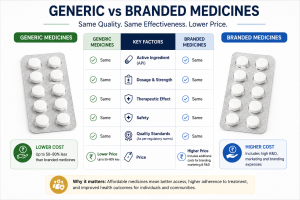
Medicines improve health only when patients can actually access them. This principle lies at the heart of India’s pharmaceutical policy. A common misconception is that generic medicines are inferior to branded medicines. In reality, generic medicines contain the same active pharmaceutical ingredient, dosage, strength, and therapeutic effect as their branded counterparts, while costing significantly less because manufacturers do not bear the initial research and development costs.
Consider a simple example. Branded paracetamol formulations are often substantially more expensive than equivalent generic formulations. Under the Pradhan Mantri Bhartiya Janaushadhi Pariyojana (PMBJP), quality-assured generic paracetamol is made available at significantly lower prices, reducing treatment costs by 50-80% while maintaining the same standards of safety, quality, and efficacy. This is precisely why India’s robust generic pharmaceutical sector is not merely an industrial success; it is a public health intervention. Affordable medicines contribute directly to Universal Health Coverage (UHC) by improving equitable access, reducing catastrophic health expenditure, and strengthening adherence to treatment for chronic diseases.
Equally important are government procurement mechanisms, including pooled procurement models and state-supported free drug schemes, which leverage economies of scale to reduce costs and improve access to essential medicines. States such as Tamil Nadu have demonstrated how pooled procurement, where medicines are purchased in bulk through competitive tendering, can reduce costs, ensure quality, and improve the availability of essential medicines in public health facilities. Together with India’s strong generic pharmaceutical industry, these initiatives have played a critical role in expanding the availability and affordability of medicines across the country.
Balancing affordability with innovation, however, remains a delicate exercise. India’s patent framework attempts to achieve this through mechanisms such as Section 3(d), pre- and post grant patent opposition, and compulsory licensing (CL), while remaining compliant with TRIPS obligations. Consequently, India has consistently resisted international pressure to adopt TRIPS-plus measures, such as patent term extensions, data exclusivity, and patent linkage, which could delay the entry of affordable generic medicines into the market and adversely affect public health.
Beyond Medicines: Building a Resilient Pharmaceutical Ecosystem
While India has established itself as a global leader in pharmaceutical formulations, its dependence on imported Active Pharmaceutical Ingredients (APIs) and Key Starting Materials (KSMs), particularly from China, continues to pose strategic vulnerabilities. The COVID-19 pandemic underscored how disruptions in global supply chains can threaten medicine security and national health resilience.
Recognising this challenge, the Government of India has launched several initiatives to strengthen domestic pharmaceutical manufacturing. The Production Linked Incentive (PLI) Scheme for bulk drugs seeks to encourage indigenous production of critical APIs and KSMs,
while the Bulk Drug Parks Scheme aims to reduce manufacturing costs through shared infrastructure. More recently, the Promotion of Research and Innovation in Pharma MedTech (PRIP) Scheme seeks to strengthen research capacity, foster academia-industry collaboration, and accelerate the development of innovative pharmaceuticals and medical technologies. Equally important is ensuring that affordability does not come at the cost of quality. India’s pharmaceutical regulatory framework, led by the Central Drugs Standard Control Organisation (CDSCO), oversees the safety, efficacy, and quality of medicines through stringent regulatory standards, Good Manufacturing Practices (GMP), pharmacovigilance systems, and bioequivalence requirements for generic medicines. These measures reinforce public confidence that affordable medicines are also safe and effective.
Ultimately, the next chapter of India’s pharmaceutical story will be shaped not only by discovering new molecules, but also by building resilient supply chains, strengthening pharmaceutical manufacturing ecosystems, investing in research and development, and ensuring that innovation remains aligned with public health priorities.
Every pill may begin its journey in a laboratory, but it’s true destination is the patient. India’s pharmaceutical experience demonstrates that intellectual property and public health need not exist in opposition. As global debates increasingly shift towards TRIPS-plus standards and technological self-reliance, India’s greatest challenge will not be choosing between patents and patients but ensuring that one continues to serve the other.
FAQs
Scheme for Promotion of Bulk Drug Parks
Expansion of PMBJKs to Reduce Healthcare Costs
Tamil Nadu Medical Services Corporation