


Table of Contents


Women leaders: Reshaping Uttarakhand’s Village Governance
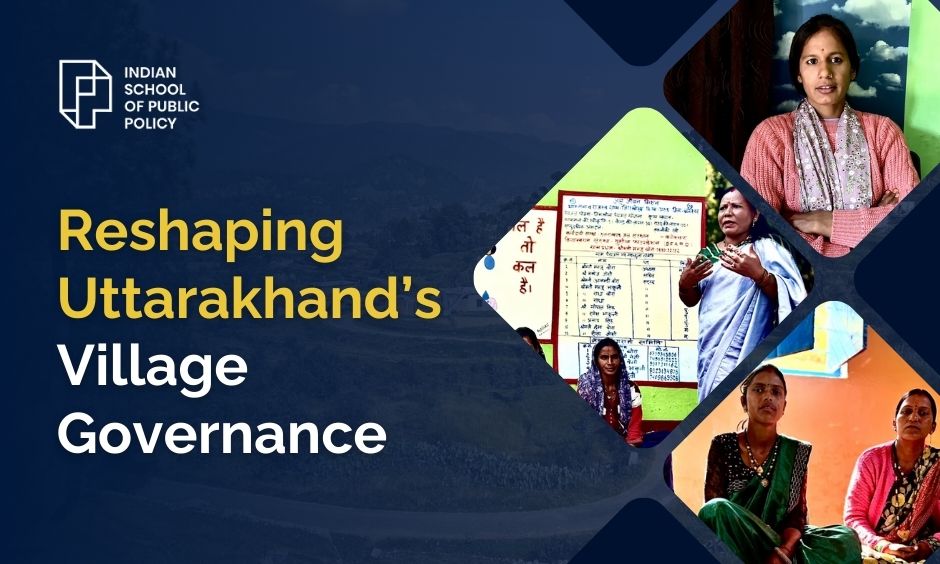

In the misty hills of Uttarakhand’s Kumaon region, a quiet behavioural change is taking root through the leadership of women Sarpanches such as Manju Bora of Jinkhola and Hema Negi of Pachisi. Their stories are being relived across all-woman Gram Panchayats i.e., transforming governance, enhancing livelihoods, and inculcating the spirit of public service.
Manju Bora, Jinkhola’s first female Pradhan, shoulders dual roles as a single parent and the elected chief. Despite the exodus of men to cities and overseas, she stands unwavering, managing both her household and the Panchayat efficiently.
Leading Mahila Sabhas, distributing seeds for crops and envisioning new income streams for ladies—from tailoring to eco-friendly crafts—Manju spearheads collective empowerment. She has cultivated a culture of innovation, advocating for low cost sanitary napkin production by village women and introducing high-yield crops like red rice, she is creating better livelihood conditions. Her firm resolve is to make the panchayat easily approachable by women who can bring up their and the community problems for resolution, which was earlier shrouded in patriarchy and impeded by taboos.
Equally inspiring is Hema Negi, one of Kumaon’s youngest Pradhans, who led the fight to keep the village school open against declining student numbers. With persistence, she persuaded parents and community to reinvest in local education, thus resulting in an increase in enrollment of students. Other priority areas for Hema include women’s health and combating domestic violence, shifting mindsets and offering to women at large.
Both these leaders are products of the 50% reservation policy for women in Panchayats, a framework enacted after the 73rd Constitutional Amendment. But their impact goes far beyond quotas. By addressing migration, fostering local enterprise, and reshaping social norms, Manju and Hema reflect a broader truth: when given a platform, Kumaon’s women become the architects of resilient, inclusive communities.
References
- BehanBox. “Gamechangers: The All-Women Gram Panchayats of Uttarakhand.” January 10, 2025.
- Azim Premji University: Gram Panchayats of Uttarakhand
