
Table of Contents


The Independence We Still Owe Every Indian
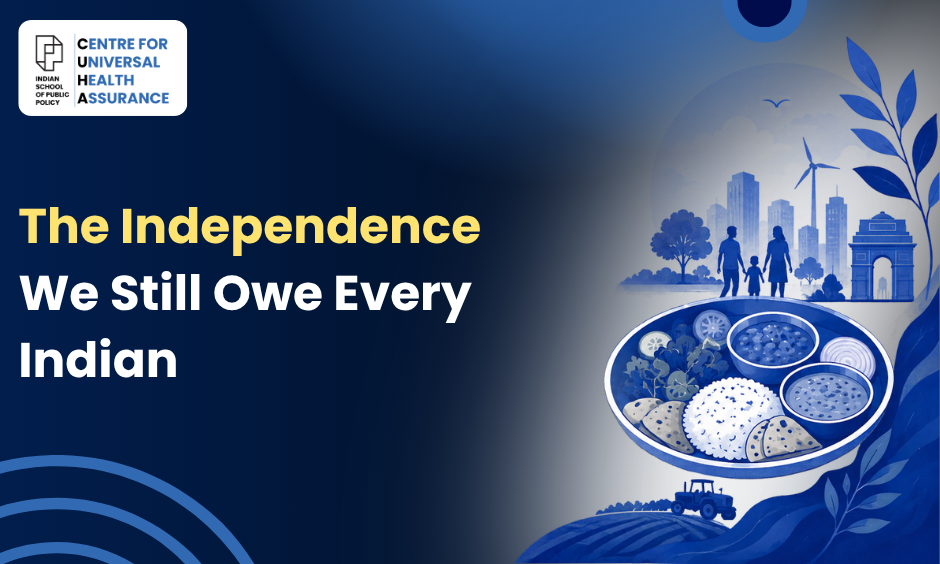

Every Independence Day, we commemorate the generation that secured India’s freedom. But nearly eight decades later, perhaps the more arduous question is this: what does freedom mean today?
The Green Revolution transformed a food-deficit nation into one that could feed itself, helping ensure that millions would no longer sleep on an empty stomach. It remains one of independent India’s greatest achievements. But history has quietly changed the question.
From Full Plates to Healthier Plates
Today, our greatest challenge is no longer simply whether our plate is full. It is whether what is on that plate is truly nourishing us.
India’s food traditions have always been diverse, shaped by season, geography, agriculture, culture and availability. Across regions, the thali could bring together rice or wheat, jowar, bajra, ragi or makki, alongside pulses, vegetables, fruits, fermented foods and other locally available ingredients. But these traditions were neither uniform nor universally adequate; poverty, social structures and seasonal scarcity also determined what reached the plate.
The lesson, therefore, is not to romanticise the past. It is to recognise what is worth carrying forward: diversity, balance and nourishment. Today, alongside this rich food culture, our cities offer an unprecedented range of commercially prepared, packaged and convenience foods. Food delivery has made meals more accessible and convenient, while changing lifestyles have altered how, when and what we eat. The concern is not that Indian food culture has disappeared, but that a new food environment now competes for space on our plates, one where foods high in salt, sugar and unhealthy fats can be inexpensive, heavily marketed and remarkably easy to access.
The Plate Is Changing. So Is the Disease Burden.
This is not merely a cultural shift; it is a public health transition.
The evidence is difficult to ignore. The Indian Council of Medical Research (ICMR) estimates that 56.4% of India’s total disease burden is linked to unhealthy diets. Today, non-communicable diseases, including cardiovascular diseases, diabetes, cancers and chronic respiratory diseases, account for nearly two out of every three deaths in the country. The ICMR’s 2024 Dietary Guidelines for Indians emphasise dietary diversity and the consumption of vegetables, fruits, pulses and whole or minimally processed foods, while cautioning against excessive consumption of foods high in fat, sugar and salt and highly processed foods.
Yet India’s nutrition story is not one of simple excess. Undernutrition and micronutrient deficiencies continue alongside rising overweight and obesity. We are therefore confronting a more complicated question: not simply whether India has enough food, but whether Indians can access food that is safe, diverse, affordable and nutritious. The answer cannot lie in regulation alone. Food safety standards and stronger enforcement are indispensable, but they are only one part of the solution. The future of India’s health will also be shaped by the choices consumers make, the products businesses manufacture, the crops farmers are incentivised to grow and the food environments governments create. Public health begins long before a patient enters a hospital; it begins on farms, in kitchens, in schools, in markets and at dining tables.
As India aspires to become a Viksit Bharat, perhaps it is time to redefine what development looks like. We celebrate highways, digital payments, satellites and economic growth, and rightly so. But progress must also be measured by whether the food that sustains us enables Indians to live longer, healthier lives.
Political independence gave us the freedom to shape our destiny. The next freedom we owe every Indian may be the freedom to know, trust and choose what nourishes us. A nation is not truly nourished when every plate is full. It is nourished when every plate helps secure a healthier future.
FAQs
Dietary guidelines across different countries & comparisons to dietary guidelines for Indians, 2024
ICMR releases 17 dietary guidelines
India: Health of the Nation’s States the India State-Level Disease Burden Initiative