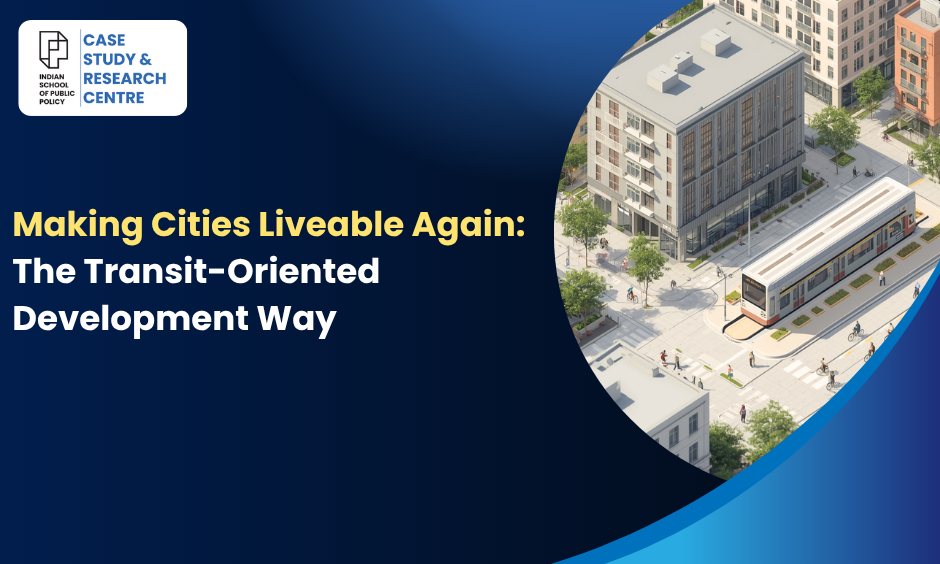
Indian cities are growing fast and expanding outward, leading to longer and longer commutes, which in turn cause choking traffic, rising pollution, and infrastructure that cannot keep pace with population growth. If that were not bad enough, financing compatible infrastructure amid poorly financed urban local bodies (ULBs) prevents sophisticated solutions from being implemented. Now imagine… Continue reading Making Cities Livable Again: The Transit-Oriented Development Way
Tag: india
Content on India’s policy landscape at ISPP, covering governance, development, public affairs, and issues shaping the nation’s future.
Making Cities Livable Again: The Transit-Oriented Development Way
From Coverage to Trust: Rethinking India’s Health System
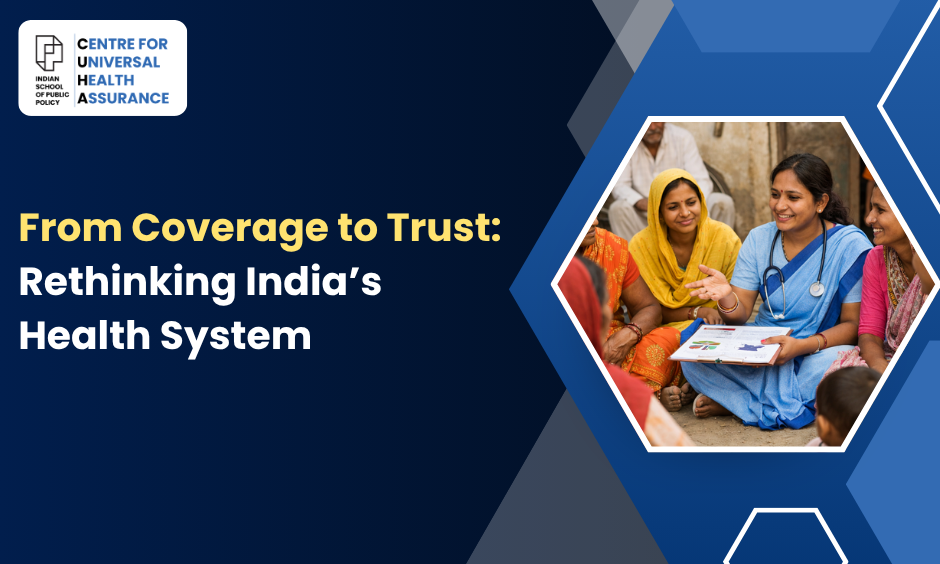
On World Health Day 2026, a case for putting community engagement at the centre of India’s health system. We live in an era blessed by astounding scientific advances, yet their uptake remains uneven in public health systems. Their benefits remain inadequately tapped for advancing population health and treating individuals who fall sick. Evidence-based guidance fails… Continue reading From Coverage to Trust: Rethinking India’s Health System
Risk of Rapid Delivery
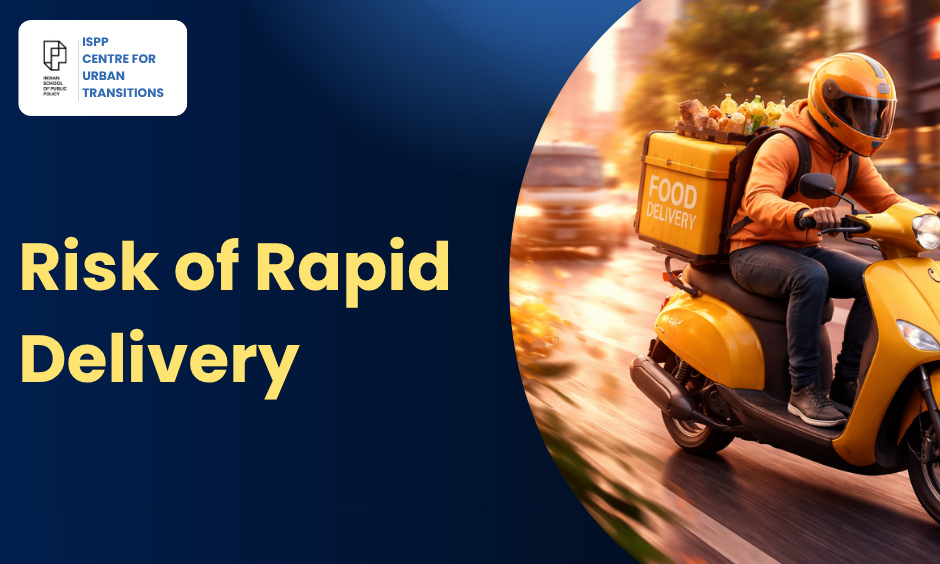
On 3 April 2026, the Delhi edition of The Indian Express carried a tragic news item. A young food delivery agent, while completing his last delivery around 2 am, was hit by a reportedly speeding Mercedes and was killed on the spot. A young life was prematurely lost. The Rise of Rapid Delivery Culture Unfortunately,… Continue reading Risk of Rapid Delivery
India’s EV Policy Puzzle: Incentivising Adoption or Building a Sustainable Ecosystem?
India has set itself a bold target: 30% electric vehicle penetration by 2030. We’re still far from that number. But over the past decade, the government has launched over a dozen schemes, poured hundreds of thousands of crores into the sector, and rewritten tax and infrastructure rules to speed up the transition. The idea is… Continue reading India’s EV Policy Puzzle: Incentivising Adoption or Building a Sustainable Ecosystem?
The Bottleneck Nobody’s Talking About: Financing EV Freight in India
What will it really take to put zero-emission trucks on India’s highways, and who will pay for the infrastructure to charge them? India has 175,000 electric charging stations but only 9,000 of them can actually charge a truck. This single fact captures the scale of the challenge ahead. This gap is not just a logistical… Continue reading The Bottleneck Nobody’s Talking About: Financing EV Freight in India
Reimagining Health Financing for Universal Health Assurance
Universal health assurance (UHA) is a more ambitious framework than traditional universal health coverage (UHC). It suggests access to essential services without financial hardship. Also, guarantees that people can count on their health system through shocks, crises and over the course of their lives. The SDG-3 goals emphasise leaving no one behind; pushing countries to… Continue reading Reimagining Health Financing for Universal Health Assurance
Maharashtra’s Water Banks: A Looming Banking Crisis without a Bailout Option
In the 1860s, England was facing an acute shortage of coal. Some experts contended that improving technology would reduce coal consumption. But contrary to this, technological improvements that increased the efficiency of coal led to the increased consumption of coal in a wide range of industries. English Economist William Stanley Jevons argued that technological progress… Continue reading Maharashtra’s Water Banks: A Looming Banking Crisis without a Bailout Option
Improving the Swachh Bharat Mission through behavioural interventions
The Swachh Bharat Mission (SBM) was initiated in 2014 to achieve universal sanitation coverage. The cleanliness drive aimed to make citizens health-conscious by providing financial incentives for solid/liquid waste management (SLWM), toilet construction, technical assistance, and capacity building (Aijaz, 2017). The Swachh Bharat Mission has successfully executed its target of toilet construction with about 99%… Continue reading Improving the Swachh Bharat Mission through behavioural interventions
In Conversation with Prerna Mukharya: Data and Public Policy
In this interview, Prerna talks about the importance and necessity of credible data in the policy making process. The interview is conducted by ISPP Scholar, and Executive Editor of the Policy Review, Kavya Datla.
Quality Education and Expanding Learning Opportunities – Challenges in the EdTech Space
India has successfully improved school enrolment in recent decades yet failed to deliver actual learning. The ASER Survey by NGO Pratham (2020) spotlights large learning deficits in students’ foundational learning. For instance, only 50% of Class V students can read texts of Class II level. More than half the students in Class VIII struggle to… Continue reading Quality Education and Expanding Learning Opportunities – Challenges in the EdTech Space