


Table of Contents


From Coverage to Trust: Rethinking India’s Health System
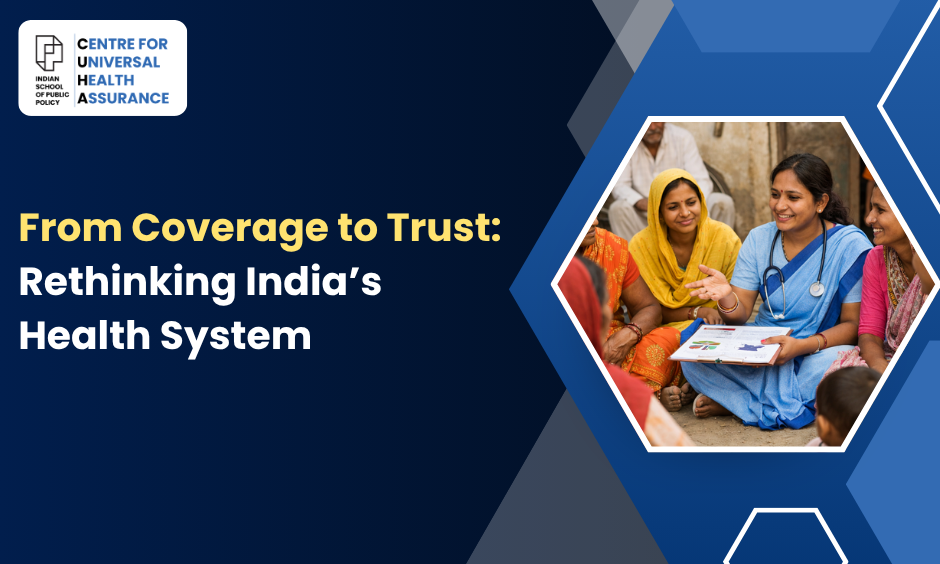

On World Health Day 2026, a case for putting community engagement at the centre of India’s health system.
We live in an era blessed by astounding scientific advances, yet their uptake remains uneven in public health systems. Their benefits remain inadequately tapped for advancing population health and treating individuals who fall sick. Evidence-based guidance fails to travel the last mile, not for lack of knowledge, but for lack of connection and trust. As we celebrate World Health Day, this year’s theme asks us to “Stand with science.” We believe that standing with science, honestly and fully, also means standing with communities.
Coverage vs Assurance: The Missing Link in Public Health
At CUHA, we make a deliberate distinction between coverage and assurance.
- Coverage counts the services that exist.
- Assurance asks whether people actually trust, access, and benefit from them.
This gap between what a system offers and what a community receives is, fundamentally, a relationship issue. No amount of clinical infrastructure can substitute for the trust that makes people walk through a health centre’s door. Participation matters not just in uptake, but across programme design, delivery, monitoring, and evaluation; because it shapes relevance, accountability, and ultimately, outcomes.
Community Engagement in India: Strong Framework, Weak Execution
India has the institutional architecture for this relationship. Village Health, Sanitation and Nutrition Committees (VHSNCs) were designed as spaces for participatory governance; local bodies where communities could shape health priorities and hold systems accountable. They remain, largely, spaces of unrealised potential. Constrained by limited financial flexibility and weak decentralised decision-making, they have yet to become the active sites of local ownership they were envisioned to be. Urban equivalents are even more nascent. Similarly, participatory research which enables communities co-produce knowledge remains underutilised, despite its proven value in improving acceptability and effectiveness of interventions.
ASHAs: The Backbone Under Pressure
At the frontline, ASHAs continue to be the backbone of community engagement, but they are stretched. Their portfolios have expanded far beyond mobilisation and awareness generation into data collection, programme implementation, and increasingly complex reporting demands. When we overburden the very people who bridge communities and the health system, we risk breaking the bridge itself. Strengthening community engagement must begin with protecting and resourcing those who carry it every day.
Reimagining Community Engagement as Core Infrastructure
What would it mean to treat community engagement not as a tokenistic programme component, but as core infrastructure? It would mean revitalising VHSNCs and urban platforms as genuine decision-making bodies with flexible financing that reflects local needs and reaches those most often left out. It would mean shifting from one-time trainings to sustained mentoring, backed by experienced facilitators. It would mean measuring not just coverage, but community voice.
Conclusion: Communities Make Science Work
Science can name the problem and point to the solution. But it is the trusted, engaged, and empowered communities that make the solution real. Universal Health Assurance will be built not only on what we know, but on how faithfully we show up for the people we seek to serve.
FAQs
Sources:
For a more detailed discussion on this, please refer to our flagship report: Road to Viksit Bharat: From Achieving Universal Health Coverage to Attaining Universal Health Assurance – ISPP | India’s Leading Public Policy Institution